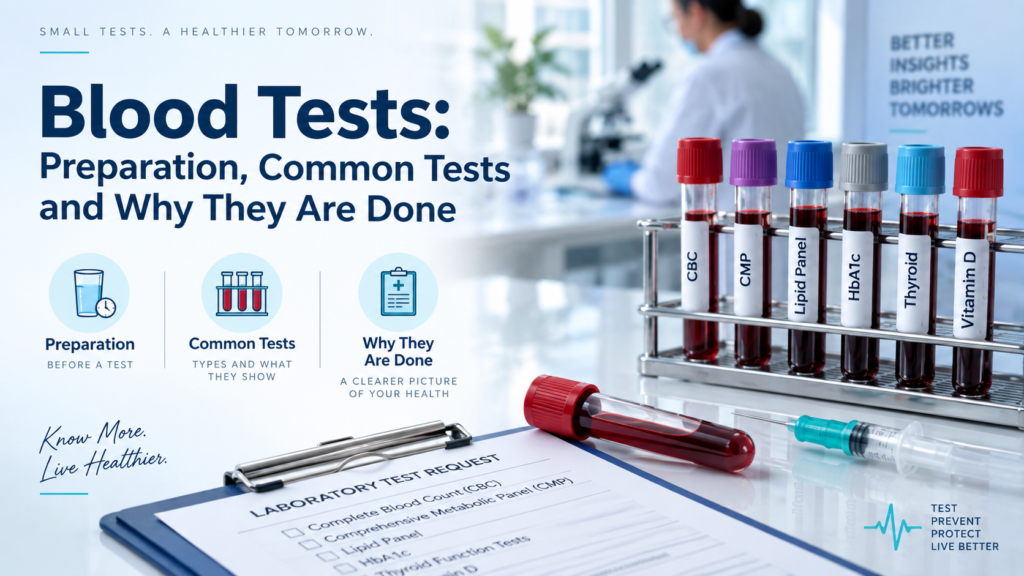
Blood tests are among the most frequently used medical investigations. They provide doctors with useful information about different organs, blood cells, metabolism and overall health.
Blood investigations may be recommended during routine health checks, while evaluating symptoms or when monitoring an existing medical condition.
Why Do Doctors Recommend Blood Tests?
A blood test can help a doctor evaluate several aspects of your health.
Depending on your symptoms and medical history, tests may be recommended to assess:
- Blood cell levels
- Blood sugar
- Liver function
- Kidney function
- Cholesterol
- Thyroid function
- Infection or inflammation
- Nutritional deficiencies
- Electrolyte levels
Not every patient requires the same tests. Investigations should ideally be selected based on clinical need.
Common Blood Tests
Complete Blood Count
A Complete Blood Count, commonly called CBC, evaluates different components of the blood.
It generally includes measurements related to:
- Haemoglobin
- Red blood cells
- White blood cells
- Platelets
Doctors may recommend a CBC while evaluating fever, weakness, infections, anaemia and several other conditions.
Blood Sugar Tests
Blood glucose testing is commonly used to screen for and monitor diabetes.
Depending on your clinical requirements, your doctor may advise:
- Fasting blood sugar
- Post-meal blood sugar
- Random blood sugar
- HbA1c
HbA1c provides information about average blood glucose levels over the preceding few months.
Kidney Function Tests
Kidney function tests help assess how effectively the kidneys are working.
They may include parameters such as:
- Creatinine
- Urea
- Electrolytes
These tests are often used in patients with diabetes, hypertension, kidney disease or certain other medical conditions.
Liver Function Tests
Liver function tests measure several substances associated with liver health.
Doctors may recommend them when investigating symptoms such as jaundice, abdominal discomfort or suspected liver disease.
Lipid Profile
A lipid profile measures different types of fats in the blood, including cholesterol and triglycerides.
It is commonly used during cardiovascular risk assessment.
Do You Need to Fast Before a Blood Test?
Not every blood test requires fasting.
Certain investigations may require you to avoid food for a specific number of hours, while others can be performed without fasting.
Your doctor or diagnostic centre should tell you whether fasting is necessary.
Do not stop regular medicines unless your doctor specifically advises you to do so.
How to Prepare for a Blood Test
Before your test:
- Follow fasting instructions if provided
- Drink water unless instructed otherwise
- Inform the healthcare team about medicines you take
- Mention any relevant medical conditions
- Carry previous reports when available
Proper preparation can help improve the usefulness of the investigation.
What Happens After the Test?
Your blood sample is sent for laboratory analysis.
Once the report is available, results should ideally be interpreted along with your symptoms, medical history and examination findings.
A value outside the laboratory reference range does not automatically mean that you have a disease.
Your treating doctor is the appropriate person to interpret your report.
Blood Testing and Medical Consultation at Arogyam
Arogyam Multispeciality Health Clinic provides access to doctor consultations and diagnostic support for patients in Guwahati.
If your doctor has recommended blood investigations or you require evaluation for symptoms, you may contact our clinic for assistance.
Phone: 098540 41111
Clinic Hours: 9:00 AM to 9:00 PM
Laboratory results should always be interpreted in the context of your overall health and clinical evaluation.
You Might Also Like