
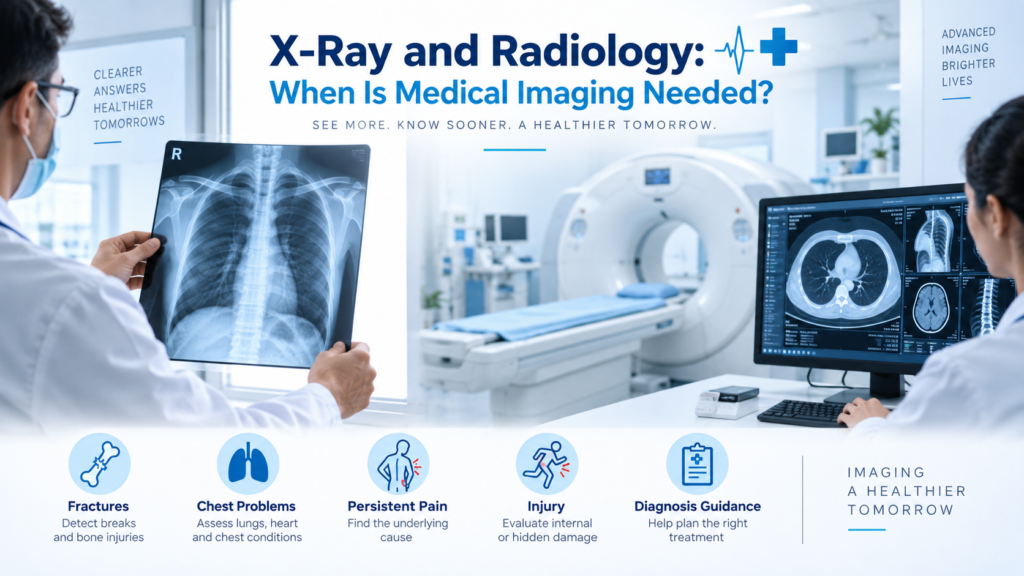
Medical imaging helps doctors view structures inside the body that cannot be assessed through physical examination alone.
X-rays are among the most commonly used imaging investigations and may be recommended for a wide range of clinical situations.
Radiology as a broader speciality includes several imaging methods used for diagnosis and medical evaluation.
What Is an X-Ray?
An X-ray uses a controlled amount of ionising radiation to produce images of structures inside the body.
Dense structures such as bones appear differently from softer tissues, allowing doctors to evaluate particular abnormalities.
Why Might a Doctor Recommend an X-Ray?
X-rays may be used while evaluating:
- Bone injuries
- Suspected fractures
- Joint problems
- Chest conditions
- Certain lung symptoms
- Some forms of infection
- Other doctor-advised clinical concerns
The exact type of X-ray depends on the area being examined.
Chest X-Ray
A chest X-ray provides an image of structures within the chest.
Doctors may consider a chest X-ray when evaluating symptoms such as:
- Persistent cough
- Fever with respiratory symptoms
- Breathlessness
- Chest discomfort
- Suspected lung infection
A chest X-ray alone does not establish every diagnosis. Findings need to be considered along with symptoms and clinical examination.
Bone and Joint X-Rays
X-rays are commonly used following injuries because they can help identify many types of fractures.
They may also help evaluate certain changes affecting joints or bones.
Is an X-Ray Painful?
The X-ray itself is painless.
However, patients with an injury may experience discomfort while positioning the affected body part.
Let the healthcare professional know if movement is painful.
How Should You Prepare?
Many routine X-rays require little preparation.
You may be asked to:
- Remove jewellery
- Remove metallic objects
- Change into appropriate clothing
- Inform the radiology team if you are pregnant or may be pregnant
Certain specialised imaging examinations may require additional preparation.
Why Medical History Matters
Imaging should not be considered separately from the rest of your medical evaluation.
Your doctor may first review:
- Symptoms
- Duration of illness
- Previous investigations
- Existing medical conditions
- Examination findings
This information helps determine which imaging investigation is appropriate.
Radiology Services at Arogyam
Arogyam Multispeciality Health Clinic offers healthcare services that include specialist consultation, diagnostics and radiology support in Guwahati.
Patients requiring medical imaging can contact the clinic for service availability and appointment information.
Phone: 098540 41111
Clinic Hours: 9:00 AM to 9:00 PM
Imaging investigations should be performed based on appropriate clinical advice, particularly when radiation is involved.
You Might Also Like